The Husainy Trust
Get Involved
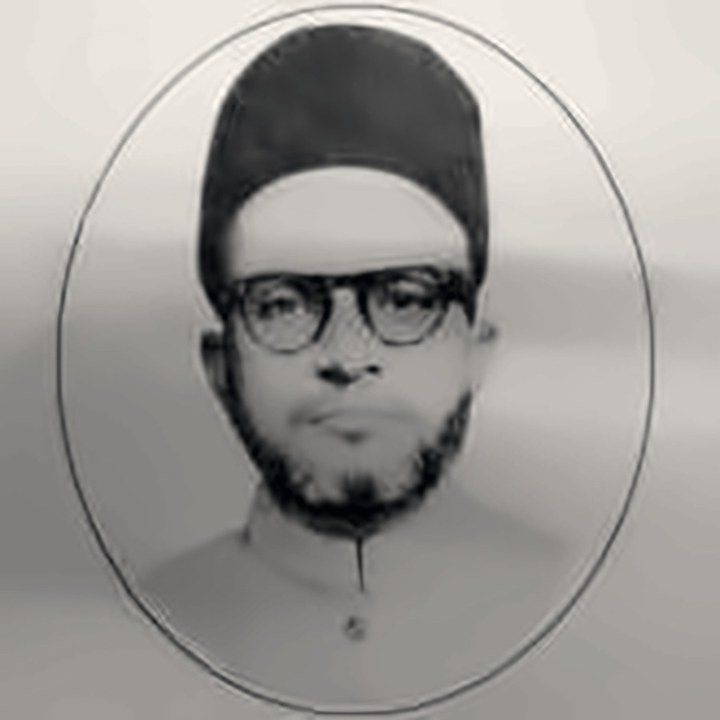
Portrait of S. V. Mir Ahmed Ali Sahib, founder of the Husainy Trust
Restored from the only surviving photograph
Our founder · 1902 – 1976

Sajjadi Vafakhani Mir Ahmed Ali Sahib

Scholar, educationist, author and social reformer, whose life was devoted to knowledge, interfaith understanding and the upliftment of the underprivileged.

“The learned lives, although he dies.”— Imam Ali ibn Abu Talib (a.s.)

A life of knowledge and service

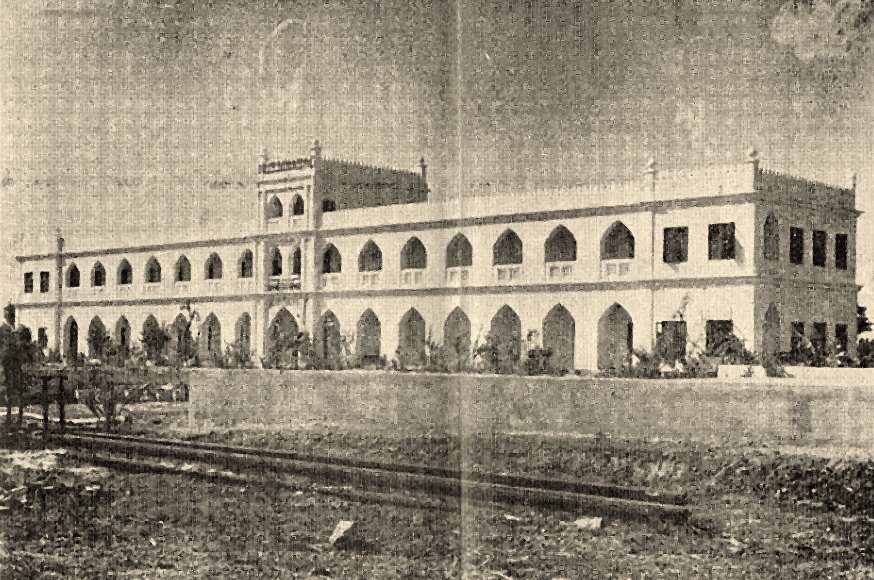
An early photograph of the Husainy Yateemkhana building at Husainabad, Madras
The Husainy Yateemkhana (orphanage) at Husainabad, Madras, in its early years.

He came from the Sajjadi family, descendants of Imam Zayn al-‘Abidin (a.s.), whose forebears travelled from the Hejaz through Iran to settle in Bijapur. The name Vafakhani was a title of honour given to his great-grandfather, Mir Abdul Ali Sajjadi, a Mughal commander known for his loyalty. His father later moved the family to Madras so that his three sons could be educated.

He belonged to a rare generation of scholars who moved with ease between the madrasa and the university. Fluent in Arabic, Persian, English and German, he read across faiths and traditions, and held that faith and reason, learning and character, belong together.

What moved him most was the sight of children with no one to care for them. He believed charity alone would not change their lives. They needed a home, discipline, an education and the means to earn a living. That conviction became the founding idea of the Trust.

He later retired early from the Government Arts College, Madras, to give himself wholly to his life’s work. He travelled widely to win support, and built the campus at Husainabad piece by piece. Through his writing and his translation of the Holy Qur’an, his work also reached readers far beyond Chennai.

His family’s journey

His father’s family, the Sajjadis, settled first in Mazandaran in Iran and came to India in Mughal times, making their home at Bijapur. The Vafakhanis were later granted estates at Doddaballapur and Tumkur, and the family spread through the old Mysore State.

One branch received lands at Sillur near Vellore, which they named Angoor Bagh; another founded Madeenapet, now Mudinampet, near Virinchipuram. His grandfather, S. V. Mir Raza Ali, settled there. His father served in the 73rd Carnatic Regiment and fought in the Burma War.

His mother’s family, the Naqavis, descendants of the tenth Imam, Ali an-Naqi (a.s.), had come from Kirman in Iran and settled in Madras by way of Nawalpak. After the war his father took his share of the estate and moved to Madras City, determined to educate his sons: Mir Ahmed Ali and his younger brothers, S. V. Mir Haider Ali and S. V. Mir Raza Ali.

His teachers in Madras

Madras was home to great scholars, and he studied under several of them. He began Arabic under Maulvi Amjad Ali Khan Sahib, revered by scholars of every school as a defender of the faith. He spent three years learning Arabic syntax and Ja‘fari theology from Shamsul Ulema Sayyid Hasan Raza Sahib, remembered for his simplicity and piety.

He also studied with Agha Sayyid Hidayatullah Shustari, the Iranian scholar who held the chair of Persian at the Government Muhammadan College.

Above all, he was the student of Ayatullah Agha Mirza Mahdi Pooya Yazdi, who arrived in Madras from Najaf around 1925. He called him his “master and guide”, and said he had never met another scholar with such knowledge of the Qur’an. Agha Pooya’s notes, marked “A.P.”, run through the whole translation.

Education and qualifications

Eight degrees and diplomas, earned while he worked

He joined the Government Muhammadan College, Madras, as a clerk straight from school, and rose to Assistant Lecturer and Assistant Professor while studying alongside his work, taking a year’s leave only for his research degree.

  1. Qur’anRecital completed at nineTaught by his maternal uncle, Janab Mir Jaffer Hussain “Peer”
  2. Matric.Harris High School, MadrasWon the Bible Prize and Bible Scholarship every year
  3. Munshi FazilOriental titleEarned while serving at the Government Muhammadan College
  4. B.O.L.Bachelor of Oriental LearningClassical oriental languages and literature
  5. M.A.Master of Arts, Arabic and PersianWhich led to his appointment as Assistant Lecturer
  6. B.T.Bachelor of TeachingProfessional training as an educationist
  7. GermanMadras University diplomaTaken to read the research literature in psychology
  8. M.Ed.Master of Education, PsychologyResearch thesis supervised by Dr G. D. Boaz, Head of Psychology, Madras University
  9. H.P.Higher Proficiency, Arabic and PersianTwo diplomas, taken at the suggestion of his principal, Dr M. A. Huq
CareerClerk, then Assistant Lecturer and Assistant Professor, Government Muhammadan College (later Government Arts College), Madras, until his early retirement to devote himself to the translation and the Trust.
Religious learningArabic under Maulvi Amjad Ali Khan Sahib; three years of Arabic syntax and Ja‘fari theology under Shamsul Ulema Sayyid Hasan Raza Sahib; studies with Agha Sayyid Hidayatullah Shustari; and a lifetime as the student of Ayatullah Agha Mirza Mahdi Pooya Yazdi.
HonoursNamed representative (Niabat) by Ayatullah Sayyid Hadi Milani of Mashhad and Ayatullah Sayyid Mahmud Shahroodi of Najaf, 1963. Represented Islam at the 1954 world religions conference.
Milestones

  1. 1902Born in Madras on 15 July, into the Sajjadi Vafakhani family
  2. Early yearsTaught by his maternal uncle, Mir Jaffer Hussain “Peer”, he completes the Holy Qur’an at nine, and wins the Bible Prize every year at Harris High School, Madras
  3. ScholarRises from college clerk to Assistant Professor at the Government Muhammadan College, Madras, earning eight degrees and diplomas along the way
  4. 1925Publishes his first work, The King of Martyrs, at the age of 23
  5. WriterFounds and edits the monthly journal The Peace Maker in Madras, answering critics of Islam for readers in India and abroad
  6. 1943Founds Madarasa-e-Husainy and Yateemkhana, later The Husainy Trust
  7. 1954Represents Islam at a world religions conference presided over by Dr S. Radhakrishnan, and resolves to translate the Qur’an
  8. 1964Publishes his English translation and commentary of the Holy Qur’an in Karachi
  9. 1976Passes away on 17 September, President of the Trust to the end

His life’s work

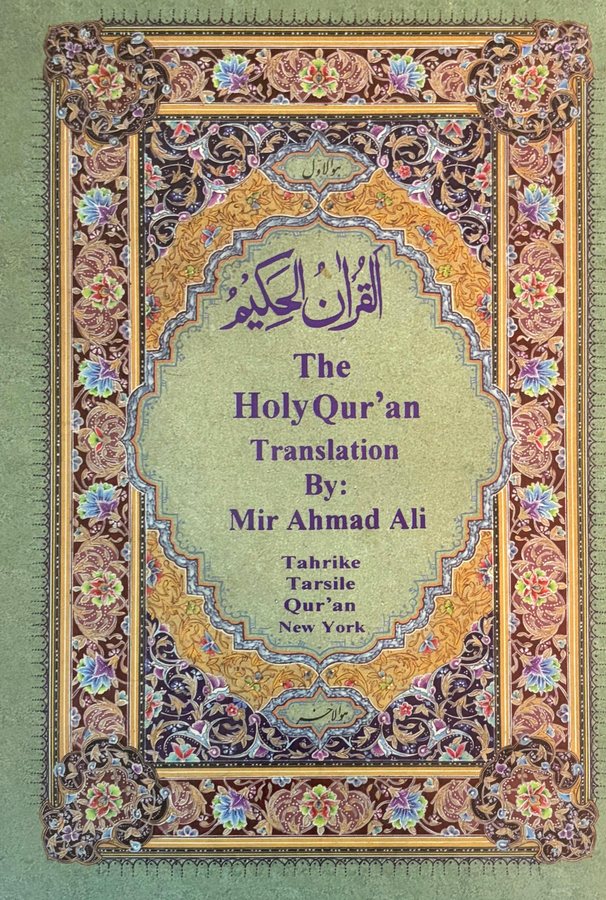
His translation of the Holy Qur’an, still in print more than sixty years on.

Cover of The Holy Qur’an, translation by Mir Ahmad Ali, published by Tahrike Tarsile Qur’an, New York
Principal work · 1964

The Holy Qur’an: Text, Translation and Commentary

First published in Karachi in 1964, his English translation set the Arabic text beside a clear English rendering, with a commentary according to the teachings of the Holy Ahlul-Bait. Ayatullah Agha Haji Mirza Mahdi Pooya Yazdi added notes on the philosophical side of many verses.

It is a work of scholarship as much as faith. The first edition runs to more than two thousand pages. It opens with a long introduction on the preservation of the Qur’an and the principles of belief and practice, and it draws on his lifelong study of Arabic, Persian and the Bible.

More than sixty years on, it is still in print. It has been reprinted in Pakistan and the United States, where Tahrike Tarsile Qur’an of New York has published it since 1988. The full text is freely available online.

1964first edition, Karachi
2,100+pages
8US editions
Freeto read online on this site

How the translation came to be

In his own introduction, he describes ten years of work, from a conference hall in Mysore to his teacher’s side in Karachi.

  1. 1954 · MysoreA question of understandingAt a world religions conference he found even great scholars misunderstood Islam, and resolved to give them a faithful English Qur’an.
    The Mysore conference

    Dr T. M. P. Mahadevan, professor of philosophy at Madras University, invited him to represent Islam at a week-long conference of world religions under the patronage of the Maharaja of Mysore, presided over by Dr S. Radhakrishnan, then Vice-President of India. He went on the advice of his old principal, Dr M. A. Huq.

    Each great faith was given a day; he gave two talks on the Qur’an and answered questions. Afterwards, scholars in the audience bought some 114 copies of Pickthall’s English Qur’an that very day. He felt keenly that there was no English translation with commentary according to the Ahl al-Bayt, and returned to Madras determined to write one.

  2. NajafA blessing, and a dreamHe travelled to Najaf to seek blessing at the shrine of Imam Ali (a.s.) before beginning.
    The dream at Najaf

    He prayed at the shrine on a Thursday night. That night he had a dream which he took as permission to go ahead, with the assurance of help in the task.

  3. BombayA remarkable coincidenceOn his way home, a host he had only just met asked him to undertake exactly the work he had resolved to do.
    His host in Bombay

    In Bombay he stayed with Hajj Rajab Ali P. Ebrahim, who at their very first meeting asked whether he would translate the Qur’an with commentary according to the Ahl al-Bayt, and offered every help. His one condition was that the first edition be dedicated to the late Hajj Dawood Ismail Habib. He paid for a full-time stenotypist for all the years of the work.

  4. Madras · nine yearsThe work itselfHe retired early from government service and gave nine years to the translation, gathering sources and working through the libraries of Madras and Hyderabad.
    Why plain English

    When he had finished the first chapter, Agha Pooya visited Bangalore, read it, and told him to go ahead, promising to review the whole before it went to press.

    Friends urged him to write in elevated English. He chose plain, understandable English instead, saying he was presenting the Qur’an, not a thesis on English literature, and leaving improvement to “abler hands” in future.

  5. Karachi · about two yearsAt his teacher’s sideHe read the whole translation aloud to Agha Pooya, often late into the night, while his teacher added notes on its key themes.
    A pause in Karachi

    In 1963 Agha Pooya fell seriously ill and was admitted to the Naval Hospital in Karachi, and the revision paused. He used the time to travel to the great centres of learning in Iran and Iraq.

  6. 1963 · Iran and IraqHonoured by great scholarsIn Mashhad, Tehran, Qum, Karbala and Najaf, leading scholars encouraged the work, and two of them named him their representative.
    Mashhad, Qum and Najaf

    Introduced by Dr Muhammad Taqi Muqtadari of the Iranian Embassy in Karachi, he spent a month in Mashhad with free access to the great Astana library. Ayatullah Sayyid Hadi Milani encouraged him and conferred on him his Niabat, appointing him his representative.

    He met scholars at Tehran University and in Qum, then went on to Karbala and Najaf. There Ayatullah Sayyid Mohsin al-Hakim offered to publish the work in Iraq at his own cost; Ayatullah Sayyid Abul-Qasim al-Khoei presented him with an autographed set of Tafsir al-Burhan; and Ayatullah Sayyid Mahmud Shahroodi received him warmly and also conferred his Niabat.

  7. 1964 · KarachiPublishedThe first edition, of more than two thousand pages, was printed by the Sterling Printing and Publishing Company, Karachi.

The work was made possible by Hajj Rajab Ali P. Ebrahim of Bombay, who paid for a full-time stenotypist for years, and his elder brother Ramzanali P. Ebrahim, who supported the cost of publication. The first edition is dedicated to the memory of Hajj Dawood Habib Ismail, remembered for his service to the poor.

Everyone he thanked

In Karachi he relied on the hospitality of the Habib family, especially Hajj Ahmad Habib Ismail, Hajj Hamid Dawood Habib and Hajj Rashid Dawood Habib, and of the Chandu family, especially Mr Abbas Chandu and his brothers. Without them, he wrote, he could not have completed the work.

He also thanked Hajj Hasan Ali P. Ebrahim and Hajj Dawood Hajj Naser Mawji for their blessings, and the Sterling Printing and Publishing Company, Karachi, singling out its young partner Mr Khaleel Shirazi, whose personal effort saw the printing through.

The Peace Maker · Madras

A journal that answered with reason

Long before the Trust and the translation, a young lecturer at the Government Muhammadan College ran a small monthly from Madras. In his own account, The Peace Maker was where he first learned to explain his faith to people of other faiths, with patience, evidence and courtesy.

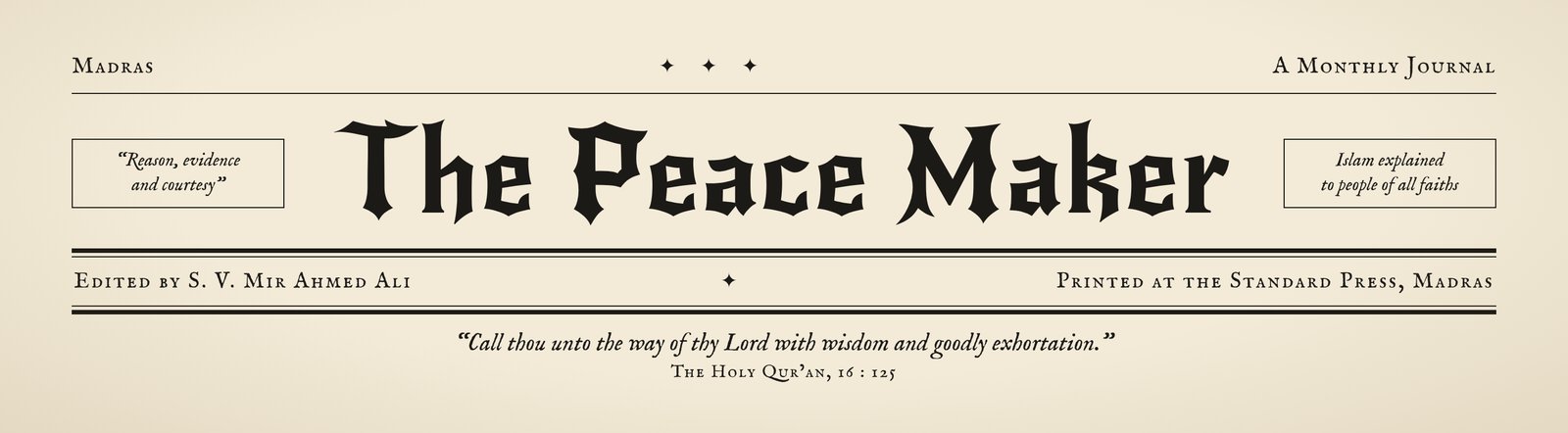
The Peace Maker masthead: a monthly journal from Madras, edited by S. V. Mir Ahmed Ali and printed at the Standard Press, Madras
This masthead has been created for this website. It is not a reproduction of an original issue.
Before the journal

Schooled in two scriptures

At Harris High School, a Church of England mission school in Madras, Bible study was compulsory. He won the Bible Prize and the Bible Scholarship every year, learned much of the Bible by heart, and spent long hours in friendly debate with the principal, Rev. Canon Goldsmith, and his Bible teacher, Mr Hanuman Singh.

The founding

Run on a lecturer’s salary

He founded the monthly with his friend G. A. Musa-e-Raza, who helped him edit and publish it, and paid for it from his own earnings. Mir Baqir Husayn Razavi of the Standard Press, Madras, printed it at almost no cost, and a Bombay firm donated a duplicating machine.

The best-known reply

An answer to Dr Zwemer

The American missionary scholar Dr Samuel Zwemer argued in The Muslim World that the Bible was the word of God and the Qur’an the word of man. The Peace Maker’s reply became its most notable article, and by his account it was well received even by Christian readers.

Its readers

From Madras to Ceylon and America

The journal travelled far beyond Madras, to readers across India, in Ceylon and in libraries in America. Scholars began to send in articles of their own.

The end, and after

Closed, but not silenced

The Catholic Register of Madras complained to the British government that a government official should not publish such a journal, and he had to stop. Years later he was moved to find old copies of the journal in the library of Hajj Dawood Nasser in Karachi. He kept writing: his booklet Truth Revealed answered a pamphlet from the Christian Information Centre in Vepery, Madras.

A teacher’s reply

A couplet that became his creed

When the cost of the journal weighed on him, he wrote to Agha Pooya, then in Rampur. The reply was a Persian couplet he never forgot, and called the inspiration of his life:

“I say not unto thee to be a fire-worm or a firefly; since thou thyself fell in love of getting burnt, behave thou manly.”

Other books and writings

From a 25-page booklet in 1925 to books still read in several languages today.

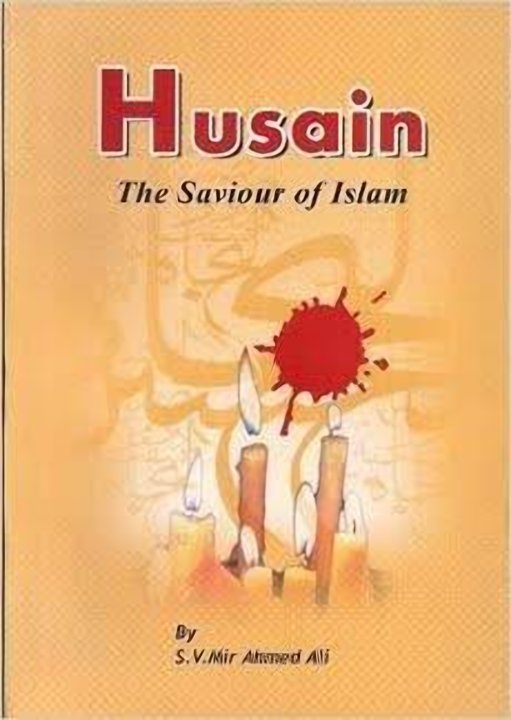
Cover of Husain, the Saviour of Islam, by S. V. Mir Ahmed Ali
Book · 1925, enlarged 1964Husayn, the Saviour of IslamThe life of Imam Husain (a.s.), from his birth to Karbala. It began in 1925 as The King of Martyrs, a 25-page booklet reprinted four times in several thousand copies each and given away free, especially to friends of other faiths. He signed the preface to the enlarged fifth edition in Karachi on 11 June 1964. It is still published today by Ansariyan Publications, Qum.Read online ↗
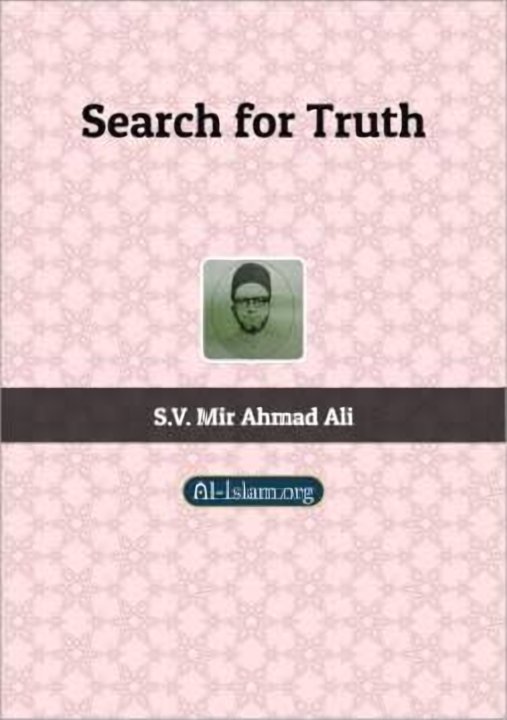
Cover of Search for Truth, by S. V. Mir Ahmad Ali
Book · from 1973Search for TruthInvited to speak on Islam by the Young Men’s Muslim Association of Trichinopoly, he held long, frank and friendly discussions there with a young man, Mr Joseph, and his mathematics professor about the beliefs of Christianity and Islam. Mr Joseph wrote up the minutes, which all of them signed. Years later, students asked him to publish them. Published by WOFIS, Tehran, since 1973.Read online ↗
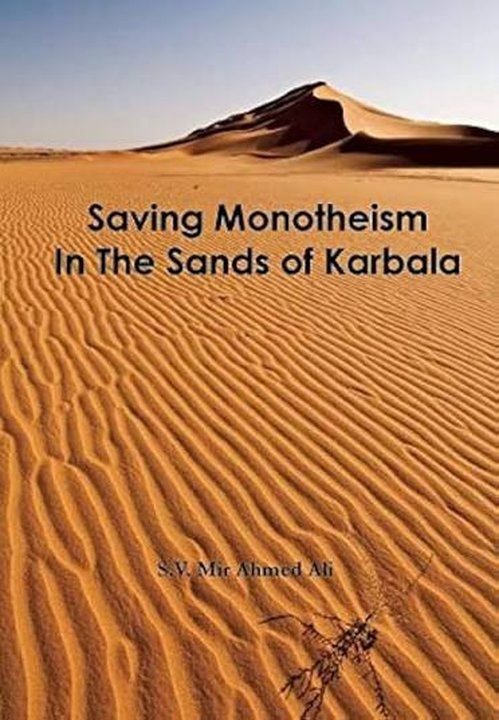
Cover of Saving Monotheism in the Sands of Karbala, by S. V. Mir Ahmed Ali
Book · 2009Saving Monotheism in the Sands of KarbalaThe battle of Karbala, fought less than fifty years after the Prophet, and the martyrdom of his grandson, Imam Husain (a.s.).View on Goodreads ↗

His other writings include Life of Prophet Muhammad and a second journal, Imam. Each year on Husayn Day, the Trust published and freely distributed his short notes on the tragedy of Karbala. His works have also been translated, including an Indonesian edition, Hussain, The King of Martyrs (Raja Para Syuhada). View on Goodreads ↗

A living legacy

Service without discrimination, education with values, and compassion in action.

He gave his own property to the Trust as a waqf, an endowment that still sustains its work today. Yet the true measure of his legacy lies not in books or buildings, but in the thousands of lives educated, sheltered and guided through the institutions he founded.

About the Trust Carry his work forward